Health and Comfort, Engineered In

Jim Schneider • July 13, 2026

Health and Comfort, Engineered In
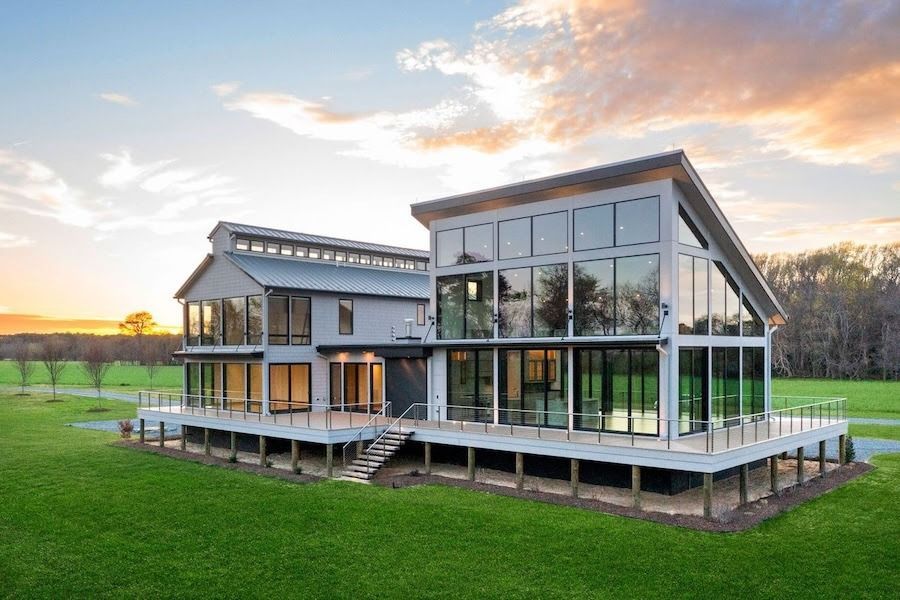
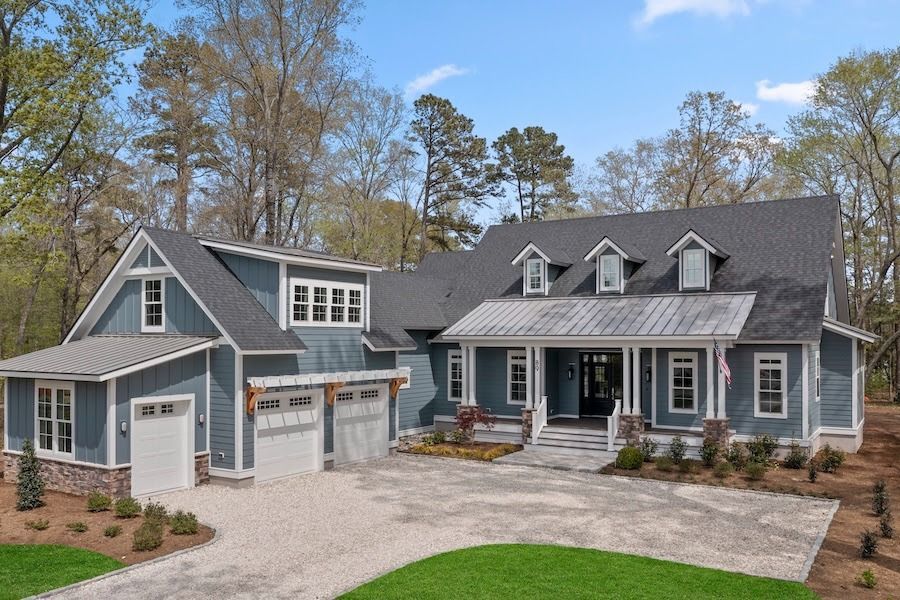
Right-sized heating and cooling is where a high-performance home is won or lost


A home that truly performs is no accident. It comes from a tight, well-insulated building envelope, deliberate air sealing, and mechanical systems sized to the house that was actually built, not the house a rule of thumb assumes. Comfort, health, and energy efficiency are the result of building science applied at every step.


Most homeowners understand that insulation and air sealing matter. What surprises them is this: in a high-performance home, your day-to-day comfort and even your indoor air quality depend heavily on how the heating and cooling equipment gets selected. Get that decision right, and the house takes care of you. Get it wrong, and no amount of good framing makes up for it.


The two pieces of equipment that matter most are the furnace and the air conditioner or heat pump. We don't live on a mild tropical coast where the windows stay open half the year. On the coast of Virginia, real comfort through hot, humid summers and cold snaps comes down to having equipment that is the right size for the load.


Why "bigger" is the wrong instinct


For decades, a lot of mechanical contractors sized equipment with rules of thumb. Many still do. Something like 30 BTUs of heating per square foot, or one ton of cooling per 500 square feet. In a drafty old house, that imprecision didn't hurt much. The house leaked so badly that oversized equipment just made up for the losses.


A high-performance home changes the math completely. A tight, well-built house leaks far less air and holds its conditioned temperature, so it needs less heating and cooling capacity, not more. Run a rule of thumb on a house like that and you'll almost always end up with equipment that is too big.


And bigger is not better here. It's the opposite.


An oversized furnace overshoots. It blasts some rooms warm and shuts off before the heat reaches the thermostat, so the house feels uneven. An oversized air conditioner is worse. It cools the air so fast that it short-cycles off before it has time to pull moisture out. You're left cold and clammy, with humidity still high. The only things that enjoy that environment are the mold and mildew in the bathroom, the growth behind the refrigerator, and the dust mites and allergens that thrive in damp air. That's a problem for anyone who breathes, and it's exactly what good building practice is designed to prevent.


How the right builder sizes it


Choosing the right builder gets you a team that eliminates this guesswork. A quality builder works only with mechanical contractors who use accurate, industry-standard sizing protocols. The foundation is a Manual J load calculation from the Air Conditioning Contractors of America. Manual J determines the exact heating and cooling a home needs by accounting for the real building: measured air leakage, insulation levels, roofing and siding type and area, the model and orientation of every window, soffit overhangs, and how the house sits on the site.


Those calculations used to take significant time. Today the software handles the heavy lifting, pulling solar gain, seasonal temperatures, local climate data, and code requirements automatically, then letting the builder and mechanical contractor fine-tune for the specific features of the home. The same tools size the ductwork and select registers that deliver the right volume of air to each room, quietly and without drafts.


The mechanical contractor is part of the team


Accurate sizing is one of the big reasons a professional builder works only with top-tier mechanical contractors, and treats them as a team member rather than a line item. In a high-performance home, energy-efficient construction isn't just about lowering bills. It's an opportunity to use measured data to optimize comfort, control humidity, and protect the health of the people living there.


So when you choose your builder, ask how they size mechanical systems. The answer tells you whether you're getting a home that's verified, right-sized, and engineered for the way you'll actually live in it, or one that was sized by a rule of thumb and hope.

Schneider Construction wins the state of Virginia's Custom Home of the Year award for 2026!

To see the presentation, click HERE


Ask the Builder:

Q: "Does high-performance really cost more?"

A: It's the first question almost everyone asks, and it's a fair one. The honest answer is that a high-performance home usually carries a higher price tag up front. But that number deserves a closer look before you decide it costs "too much."


Here's the part most people never stop to consider. The price we think of as normal for a new home was set by decades of building to standards that were, frankly, pretty low. Meeting minimum code has never meant building a good house. It means building the worst house the law allows. So when a high-performance home costs more than that baseline, the real problem isn't that the better home is overpriced. It's that we've been comparing it to a bargain that was never much of a bargain in the first place.


A conventional home hides its true cost. You pay it later, month after month, in high energy bills, uneven temperatures, humidity problems, premature equipment wear, and repairs that show up sooner than they should. A high-performance home moves those costs to the front, where you can see them and plan for them, and then it starts paying you back. Lower utility bills, a smaller and longer-lasting HVAC system, better durability, healthier indoor air, and a home that's simply more comfortable to live in every single day.


So the better question isn't "does it cost more?" It's "what am I actually getting for the money?" Judged on comfort, health, durability, and the total cost of owning the home over time, a well-built high-performance house is often the better value, not the more expensive one. It only looks pricey when you measure it against a standard that was never worth much to begin with.
By Jim Schneider June 29, 2026
The Super Secure Luxury Home | BIS 2026 St. Louis
By Jim Schneider June 8, 2026
Why Sharing Your Budget Leads to a Better Home
By Jim Schneider April 15, 2026
A Home for All Ages
By Jim Schneider April 7, 2026
A Coastal Jewel Awaits on the Chesapeake Bay
By Jim Schneider March 30, 2026
Why You Should Hire a General Contructor
By Jim Schneider March 20, 2026
And why “price per square foot” is one of the most misleading numbers in residential construction. One of the most common questions we receive is: “How much do your homes cost per square foot?” It’s a reasonable question — but for a true custom home, it’s the wrong metric. Custom homes are not mass-produced products. They are built once, on one specific piece of property, for one specific family. Unlike production homes, there is no repeatable formula where square footage alone determines price. Too many critical cost drivers have nothing to do with the size of the house. Design Drives Cost — Not Just Size Two homes can be 3,000 square feet and differ by hundreds of thousands of dollars. Why? Ceiling heights and roof complexity Window quantity, size, and performance level Structural engineering requirements Finish selections (flooring, cabinetry, tile, appliances) Exterior materials (brick, siding, stone, trim detail) Mechanical system sophistication A simple rectangular footprint costs far less than a home with multiple rooflines, structural beams, and large glass openings — even if the square footage is identical. And if a builder chooses to build high-performance homes with advanced insulation systems, geothermal HVAC, air sealing strategies, and verified performance testing, those investments improve durability and comfort — but they do not increase square footage. The Lot Can Change Everything Where you build often impacts the budget more than what you build. Slope, soil conditions, water table levels, and accessibility can dramatically alter excavation and foundation costs. Building on the Eastern Shore versus an urban infill lot in Hampton Roads comes with very different regulatory and infrastructure requirements. Utility tap fees, well and septic systems, long service trenches, stormwater management, flood zone requirements, and permit costs all vary by jurisdiction. Some municipalities require thousands — even tens of thousands — of dollars in impact and utility fees before construction even begins. These costs have zero connection to the home’s square footage. Regulations & Community Requirements HOA guidelines, architectural review boards, and local code requirements can mandate specific materials or construction methods. Coastal zones may require additional structural upgrades, elevated foundations, or moisture management strategies. Again — none of this shows up in a square foot calculation. Why Square Foot Pricing Falls Apart Square foot pricing works in production housing because every home is nearly identical. Custom homes are different. They are shaped by design complexity, site conditions, regulatory environments, performance goals, and homeowner priorities. If someone offers you a “ballpark” price per square foot without understanding these variables, that number is little more than a guess. A custom builder will invest significant time in preconstruction to understand your design, your lot, and your performance expectations. That’s how we create budgets that are accurate — not just convenient. Because in a custom home, value isn’t measured by square footage. It’s measured by how well the home is designed, built, and performs for decades to come. Warm Regards,
By Jim Schneider March 20, 2026
Recently, Jim Schneider of Schneider Construction joined Seth Kelley of MCG Homes on The Punch List Podcast to discuss one of the most important drivers of success in custom homebuilding and remodeling: building strong relationships with trade partners. During the conversation, Jim shared insights from his experience building custom homes in Cape Charles, Virginia, highlighting how long term success in the industry depends on trust, communication, and consistency with the trades that make each project possible. Together, Jim and Seth explored what separates builders that trades want to work with from those they avoid. The discussion covered everything from jobsite culture and clear expectations to accountability and mutual respect between builders and their trade partners. For Schneider Construction, these relationships are foundational. A well run project is the result of a team effort, and strong partnerships with skilled trades ensure that every home is built with the level of craftsmanship and care clients expect. If you’re interested in the business side of custom homebuilding and the importance of maintaining strong trade relationships, this episode offers practical insights into how builders can create better working partnerships and stronger projects. Be sure to tune in to the next episode as the conversation continues with a deeper look into another key piece of the puzzle: building strategic relationships with suppliers.
By Jim Schneider November 11, 2025
If you’re considering building a custom home in Cape Charles, you’ve likely heard the term “high performance home.” But what does that really mean? And why does it matter for your lifestyle on Virginia’s Eastern Shore?
By Jim Schneider November 11, 2025
Thinking about relocating to the Eastern Shore? Cape Charles, VA has become one of the most talked about towns on the Chesapeake Bay and for good reason. This small coastal community blends everyday convenience with natural beauty, affordability and a spirit of connection that’s hard to find elsewhere. For families, retirees and second home buyers, moving isn’t just about picking a house. It’s about picturing what life will actually feel like in a new town. Will the pace of life be right? Can you afford it comfortably? Will you feel at home in the community?
By Jim Schneider November 11, 2025
If you’re considering a move to Cape Charles or the Eastern Shore, one of the first questions you’ll face is: Should I buy an existing home or build new?