Who You Gonna Call?

Jim Schneider • August 4, 2026

Who You Gonna Call?

How to recognize a great custom builder, and choose the right one


People say building a custom home is as much about the experience as the result. Half true. The experience that matters lasts thirty years: living in a house where the layout, the light, and the way it performs all reflect how you live.

That starts with the builder, and part of it is chemistry. Finding the right one means meeting several candidates, after narrowing the field to the qualified ones.


Start with the business -


Any builder worth your time runs a solid company. The backstory matters less than the present: stable, financially sound, quality work delivered on time and on budget. Ask directly. How long in business under this name? Is the license current, and what class? How are subs and suppliers paid? A builder comfortable with those questions is telling you something, and so is one who is not.


Tract and custom are different businesses - 


Tract builders view homes the way Ford views cars, as products to be manufactured. The job is optimizing cost across hundreds of units, and the process is transactional. With a custom home you work alongside the builder for months. It is the difference between a factory turning out identical coffee tables and a woodworker building one table for one room. Only one is thinking about your room.


Craft is the price of admission -


Twenty years ago, "quality work" meant tight miters and square corners. That still matters, but it no longer separates good from great. The standard for how a house performs has moved, and most of the field has not.
In coastal Virginia, this is not academic. On the Eastern Shore or in Virginia Beach, a house contends with salt air, humidity, wind, and long stretches where the outdoor air is warmer and wetter than the air inside. Assembled correctly but never designed as a system, it will tell you: sticky second floors, equipment that short-cycles and never dehumidifies, a crawl space that smells like one, and utility bills that outrun every estimate
.A builder working this way talks fluently about the building envelope, about air sealing as a step with a measurable result, and about equipment sized to the house rather than a rule of thumb. The answers matter less than the reflex. One who has not thought about it changes the subject to countertops.


Then there is your site -


The site is where it gets real, and it differs by location. Considerations like septic and drainfield siting, a well, Chesapeake Bay Preservation Act setbacks, open wind exposure, infill lots, mature trees, and drainage solved without flooding a neighbor. Same test either way. A builder who has done the work raises those constraints in the first meeting. One who has not finds them at permitting.


Questions worth asking -

  • Can I walk a house you finished five years ago, and talk to those owners?
  • How do you build a budget, and what happens when a number comes in over?
  • Is my equipment sized from a Manual J calculation on my actual plans?
  • Do you blower door test, and what number do you target?
  • How does this wall assembly dry if it gets wet?
  • What do flood elevation, septic, and site work add here?


You are listening for whether the builder has thought about all this, or is thinking about it for the first time during the meeting. The best ones run real businesses but are craftspeople underneath, and increasingly building scientists too. They do not treat a house as a product. They treat it as a commissioned piece that has to look right the day you move in and still perform decades on.

Design is Everything
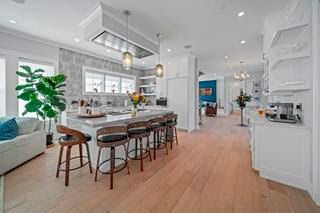
It doesn't matter who your family or friends are; the kitchen is where you gather. Designing the space to accommodate that is the key to a successful design. 


Ask the Builder:

Q: Are all windows created equal?

The glass. Windows get sold on the parts a homeowner can see, frame material, color, grille pattern, hardware. The part that does the work gets decided by default, and the default is the cheapest glass package that satisfies code. One window line from one manufacturer can be ordered a dozen different ways: double pane or triple, one low-E coating or two, air or argon fill, a standard spacer or a warm-edge spacer that keeps the glass from sweating in January. None of it changes how the window looks. All of it changes how the window performs.


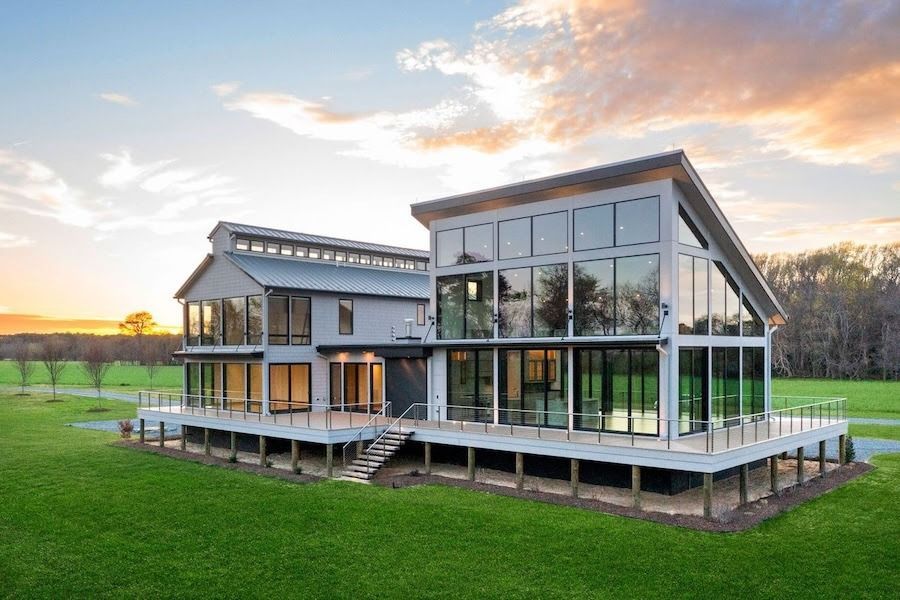
Two numbers on the NFRC label tell the truth. U-factor is how fast heat moves through the assembly; lower is better. SHGC is how much solar energy the glass lets in, and lower is not automatically better, because it depends on which way the window faces. A west-facing window has a different job in August than a north window does. Most quotes apply standard, out-of-the-box specs, which is simpler for everyone except the person paying the cooling bill. So ask three things before signing: which glass package is quoted and what its U-factor and SHGC are, in writing; whether orientation was considered and what it costs to upgrade the glass alone. Performance is not included. It has to be specified.
By Jim Schneider July 13, 2026
Health and Comfort, Engineered In
By Jim Schneider June 29, 2026
The Super Secure Luxury Home | BIS 2026 St. Louis
By Jim Schneider June 8, 2026
Why Sharing Your Budget Leads to a Better Home
By Jim Schneider April 15, 2026
A Home for All Ages
By Jim Schneider April 7, 2026
A Coastal Jewel Awaits on the Chesapeake Bay
By Jim Schneider March 30, 2026
Why You Should Hire a General Contructor
By Jim Schneider March 20, 2026
And why “price per square foot” is one of the most misleading numbers in residential construction. One of the most common questions we receive is: “How much do your homes cost per square foot?” It’s a reasonable question — but for a true custom home, it’s the wrong metric. Custom homes are not mass-produced products. They are built once, on one specific piece of property, for one specific family. Unlike production homes, there is no repeatable formula where square footage alone determines price. Too many critical cost drivers have nothing to do with the size of the house. Design Drives Cost — Not Just Size Two homes can be 3,000 square feet and differ by hundreds of thousands of dollars. Why? Ceiling heights and roof complexity Window quantity, size, and performance level Structural engineering requirements Finish selections (flooring, cabinetry, tile, appliances) Exterior materials (brick, siding, stone, trim detail) Mechanical system sophistication A simple rectangular footprint costs far less than a home with multiple rooflines, structural beams, and large glass openings — even if the square footage is identical. And if a builder chooses to build high-performance homes with advanced insulation systems, geothermal HVAC, air sealing strategies, and verified performance testing, those investments improve durability and comfort — but they do not increase square footage. The Lot Can Change Everything Where you build often impacts the budget more than what you build. Slope, soil conditions, water table levels, and accessibility can dramatically alter excavation and foundation costs. Building on the Eastern Shore versus an urban infill lot in Hampton Roads comes with very different regulatory and infrastructure requirements. Utility tap fees, well and septic systems, long service trenches, stormwater management, flood zone requirements, and permit costs all vary by jurisdiction. Some municipalities require thousands — even tens of thousands — of dollars in impact and utility fees before construction even begins. These costs have zero connection to the home’s square footage. Regulations & Community Requirements HOA guidelines, architectural review boards, and local code requirements can mandate specific materials or construction methods. Coastal zones may require additional structural upgrades, elevated foundations, or moisture management strategies. Again — none of this shows up in a square foot calculation. Why Square Foot Pricing Falls Apart Square foot pricing works in production housing because every home is nearly identical. Custom homes are different. They are shaped by design complexity, site conditions, regulatory environments, performance goals, and homeowner priorities. If someone offers you a “ballpark” price per square foot without understanding these variables, that number is little more than a guess. A custom builder will invest significant time in preconstruction to understand your design, your lot, and your performance expectations. That’s how we create budgets that are accurate — not just convenient. Because in a custom home, value isn’t measured by square footage. It’s measured by how well the home is designed, built, and performs for decades to come. Warm Regards,
By Jim Schneider March 20, 2026
Recently, Jim Schneider of Schneider Construction joined Seth Kelley of MCG Homes on The Punch List Podcast to discuss one of the most important drivers of success in custom homebuilding and remodeling: building strong relationships with trade partners. During the conversation, Jim shared insights from his experience building custom homes in Cape Charles, Virginia, highlighting how long term success in the industry depends on trust, communication, and consistency with the trades that make each project possible. Together, Jim and Seth explored what separates builders that trades want to work with from those they avoid. The discussion covered everything from jobsite culture and clear expectations to accountability and mutual respect between builders and their trade partners. For Schneider Construction, these relationships are foundational. A well run project is the result of a team effort, and strong partnerships with skilled trades ensure that every home is built with the level of craftsmanship and care clients expect. If you’re interested in the business side of custom homebuilding and the importance of maintaining strong trade relationships, this episode offers practical insights into how builders can create better working partnerships and stronger projects. Be sure to tune in to the next episode as the conversation continues with a deeper look into another key piece of the puzzle: building strategic relationships with suppliers.
By Jim Schneider November 11, 2025
If you’re considering building a custom home in Cape Charles, you’ve likely heard the term “high performance home.” But what does that really mean? And why does it matter for your lifestyle on Virginia’s Eastern Shore?
By Jim Schneider November 11, 2025
Thinking about relocating to the Eastern Shore? Cape Charles, VA has become one of the most talked about towns on the Chesapeake Bay and for good reason. This small coastal community blends everyday convenience with natural beauty, affordability and a spirit of connection that’s hard to find elsewhere. For families, retirees and second home buyers, moving isn’t just about picking a house. It’s about picturing what life will actually feel like in a new town. Will the pace of life be right? Can you afford it comfortably? Will you feel at home in the community?